
On Caribbean Math and the Limits of CARICOM Unity
- Dinah Hippolyte-Blake
- Jul 10
- 4 min read

Updated: Jul 17
Disagreement within CARICOM is not new. From a political economy perspective, conflict is not evidence that regional integration is failing. It is evidence that states are pursuing and negotiating interests.
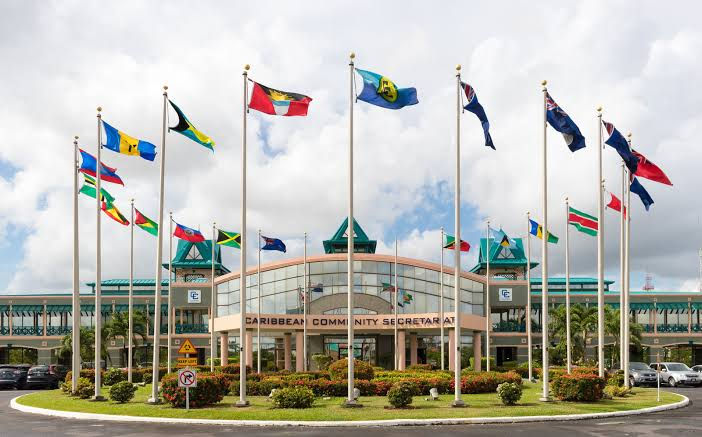
TnT, an Island gone rogue?
Much of the commentary surrounding the current dispute between Trinidad and Tobago and CARICOM treats Trinidad and Tobago as a member state gone rogue or errant, and as evidence that regional integration is under strain. That may be true, but for me, the more interesting question raised by this very public airing out of tension starts with recalling why the CARICOM project was undertaken in the first place and then asking what has changed to make these tensions so much more visible. Doing so is useful because it shifts the conversation away from personalities, governance rules, and immediate disputes towards a more fundamental question about the political and economic foundations of CARICOM as a regional integration project.
The CARICOM project and national interests
Regional institutions do not emerge simply because states share geography, culture, or a commitment to cooperation. Rather, they emerge because political leaders believe cooperation serves important economic and strategic interests. As those interests must also be made politically legitimate to the citizenry, part of the work of CARICOM’s regional integration has been cultivating a sense of Caribbean identity and regional belonging that encouraged ordinary citizens to support and participate in the project.
In this sense, the language of Caribbean unity was never merely symbolic. It helped bind our newly independent states together in an uncertain world while also performing important political work in sustaining the legitimacy of the regional project. That is why the current tension feels so unsettling to many people. It appears to challenge not only an institution but a story we have long told ourselves about the region.
“No nation has friends, only interests".
In this sense, the language of Caribbean unity was never merely symbolic. It helped bind our newly independent states together in an uncertain world while also performing important political work in sustaining the legitimacy of the regional project. That is why the current tension feels so unsettling to many people. It appears to challenge not only an institution but a story we have long told ourselves about the region.
Cold, hard political math
The current tension between Trinidad and Tobago and CARICOM reminds us that the CARICOM project has long depended on managing, rather than eliminating, these unequal national interests that exist among its members.
This has played out before with the first attempt at regional unity, the West Indies Federation.
In 1962, Eric Williams, Premier of Trinidad and Tobago declared “One from Ten Leaves Nought not Nine” and withdrew from the Federation in response to Jamaica’s withdrawal from the Federation the year before. The Federation only four years old at the time, collapsed a few months later. Williams’ declaration remains etched in our collective memory as the cold, hard political math of regional integration and national interest.
"CARICOM, since its inception has depended on managing rather than eliminating unequal interests among its members.”
Perhaps we are witnessing the inevitability of the reality of the political economy of CARICOM which Trinidad and Tobago leaders saw over 60 years ago: any regional integration project in the region rests on a delicate balance between collective aspirations and unequal national interests based on asymmetries in economic structures, power dynamics, and the right of member states to maintain sovereignty in domestic affairs.
CARICOM, since its inception has depended on managing, rather than eliminating, these unequal national interests among its members. Trade disputes, migration debates, disagreements over external relations, tensions around the CARICOM Single Market and Economy, and questions of burden-sharing of the costs of the integration project including the CARICOM Secretariat have always existed. Consensus was often achieved not because conflict was absent, but because member states continued to have shared interests and see sufficient value in the CARICOM bargain to absorb those tensions.
Does the bargain still hold?
As I argued in my recent essay on the WTO, institutions are constantly being remade, and their governing logics reproduced, through the interests of their member states. Those interests shape state preferences, actions and relationships within the institution.The question, therefore, is not simply whether CARICOM is failing. It is what the current tensions reveal about the changing political and economic realities of its member states and whether the bargain that has held the regional project together still reflects those realities.
Seen through this lens, the current dispute may be about a broader question: does the regional bargain forged in the 1970s still reflect the interests and development strategies of member states today?
"The question is not whether CARICOM is failing, but what the current tensions reveal about the changing political and economic realities of its member states.”
The Caribbean of 2026 is not the Caribbean of 1973. Development pathways have diversified and states increasingly engage global markets, external partners, and international institutions directly. Economic interests are more varied, political priorities are less aligned, and the interests binding member states together may be less concentrated than they once were. The real issue therefore may not be the existence of conflict but whether CARICOM can adapt to the changing political economy that is making that conflict harder to contain or absorb.

Comments